



Choosing health insurance for your family isn’t just about buying a policy—it’s about protecting your loved ones from unexpected medical bills. With healthcare costs rising each year, the key question is: How much family floater health insurance coverage is actually enough?


In this article, we’ll break it down in simple, practical terms and guide you on how to choose the right sum insured for your family floater plan.
What Is a Family Floater Health Insurance Plan?
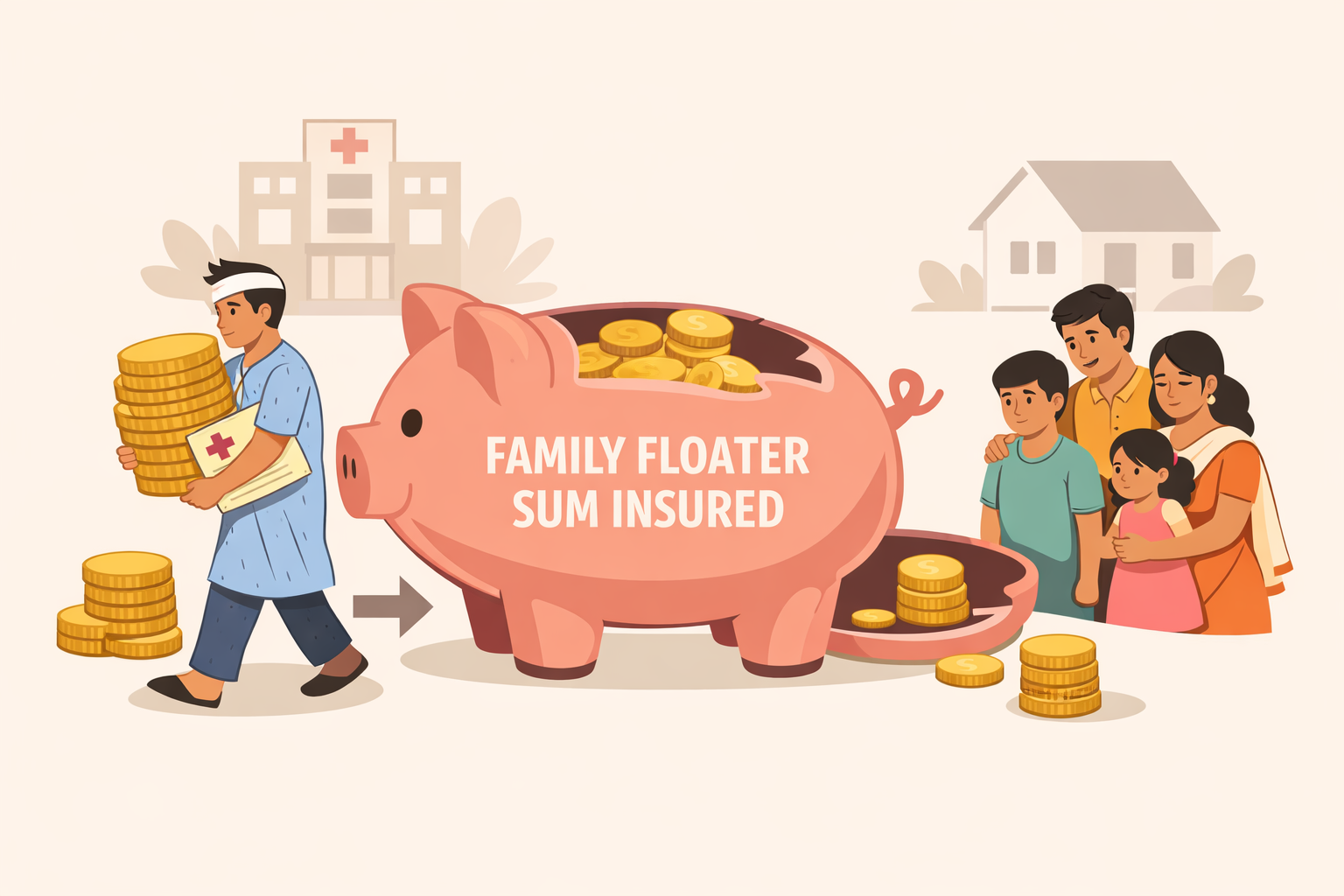
A family floater plan is a health insurance policy that covers your entire family under a single sum insured. This shared amount is the family floater health insurance coverage, which all members can use throughout the policy year.
Think of it like a family piggy bank—any member can use the money if they need hospital treatment. For example, a ₹10 lakh policy can be used by one or more family members until the full limit is exhausted.
Family floaters are popular because they are generally cheaper than buying individual plans for each member, and they provide flexibility in handling unexpected medical expenses. (IRDAI)
Why Choosing the Right Family Floater Health Insurance Coverage Matters?
Healthcare costs in India are increasing steadily. Even a short hospital stay can run into lakhs of rupees. Surgeries, ICU care, and long-term treatments can easily exceed ₹5–10 lakh.
If your family floater health insurance coverage is too low, a serious illness could leave you paying a large amount out of pocket. That’s why choosing the right sum insured is critical for your family’s financial security. (IRDAI)
Recommended Family Floater Coverage Ranges
So, how much family floater health insurance coverage should you aim for? Experts recommend different amounts based on your city, family size, and health risks.
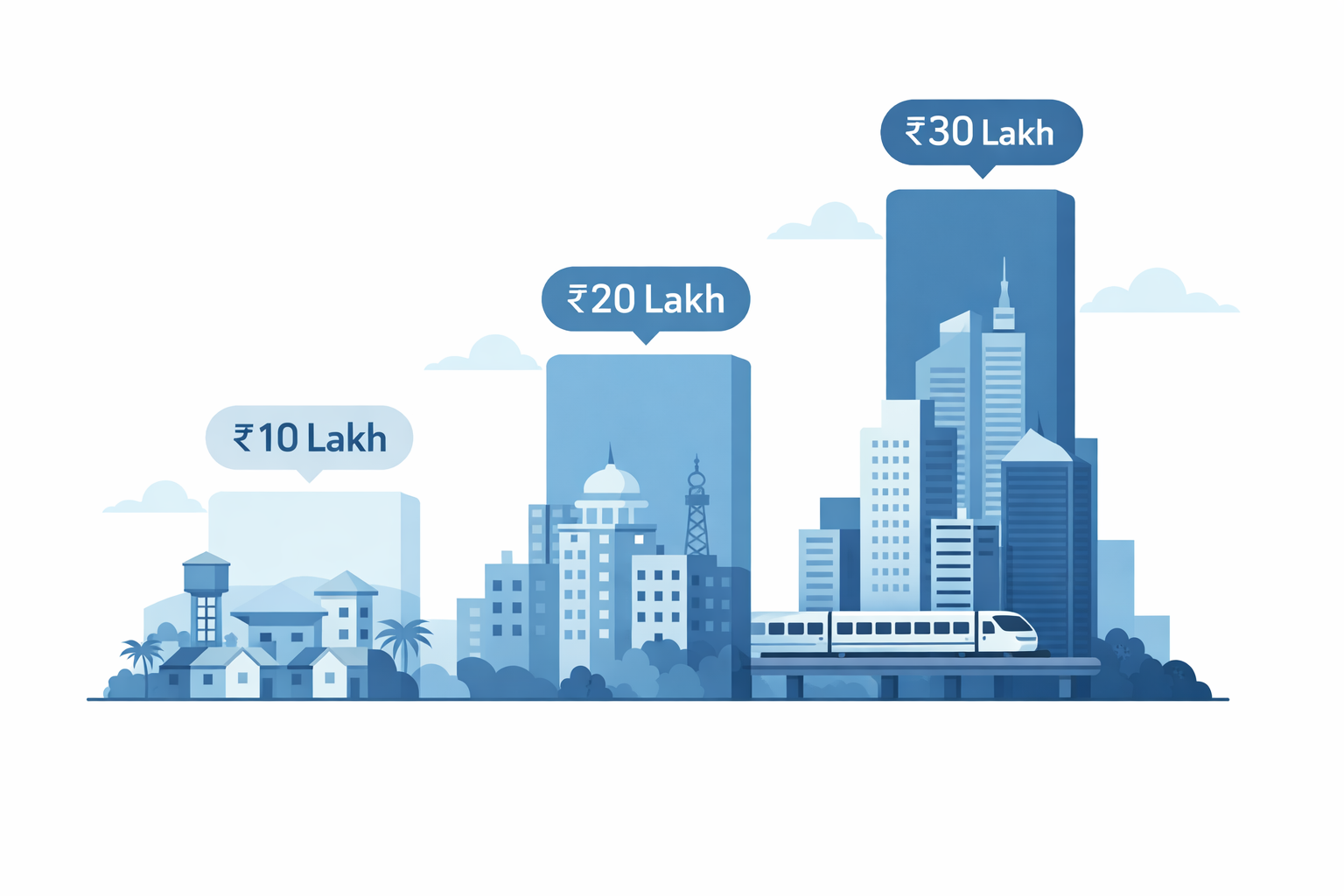
| City Tier | Recommended Sum Insured |
|---|---|
| Metro Cities (Delhi, Mumbai, Bengaluru) | ₹30 lakh & above |
| Tier‑2 Cities | ₹20 lakh & above |
| Tier‑3 Cities | ₹10 lakh & above |
Metro cities have higher hospital costs. ICU stays, surgeries, and specialist fees can quickly eat into a low sum insured. In smaller towns, costs are lower, but medical inflation means coverage should still be adequate.
How to Decide the Right Family Floater Health Insurance Coverage for Your Family
There isn’t one magic number. The right coverage depends on these key factors:
1. Family Size & Ages
- A young couple with kids might be fine with ₹10–15 lakh.
- Including elderly parents? You may need ₹20 lakh or more. Older members generally have higher health risks, which can quickly deplete the coverage. (SMC Insurance)
Tip: Sometimes it’s better to keep senior members on a separate policy rather than including them in a family floater. It keeps premiums manageable and ensures coverage lasts for everyone.
2. City & Hospital Preferences
Consider the hospitals you’re likely to visit. A ₹5 lakh policy with a ₹5,000/day room limit may not even cover a week in a top metro hospital. Ensuring your family floater health insurance coverage aligns with local hospital costs is critical.
3. Medical History & Pre-Existing Conditions
Ongoing health issues increase the likelihood of hospitalizations. If a family member has chronic conditions, higher coverage or separate senior plans are wiser.
4. Maternity or Planned Procedures
If you’re planning for maternity coverage, ensure your policy includes it. Keep in mind waiting periods and limits for maternity-related claims.
How Claims Use Your Family Floater Health Insurance Coverage
One important concept: in a floater plan, one expensive claim can use up a large portion of your family floater health insurance coverage.
For example, if your policy is ₹10 lakh and one member undergoes surgery costing ₹6 lakh, only ₹4 lakh remains for the rest of the family for the policy year. That’s why it’s safer to choose a higher sum insured.
Top-Up and Super Top-Up Plans
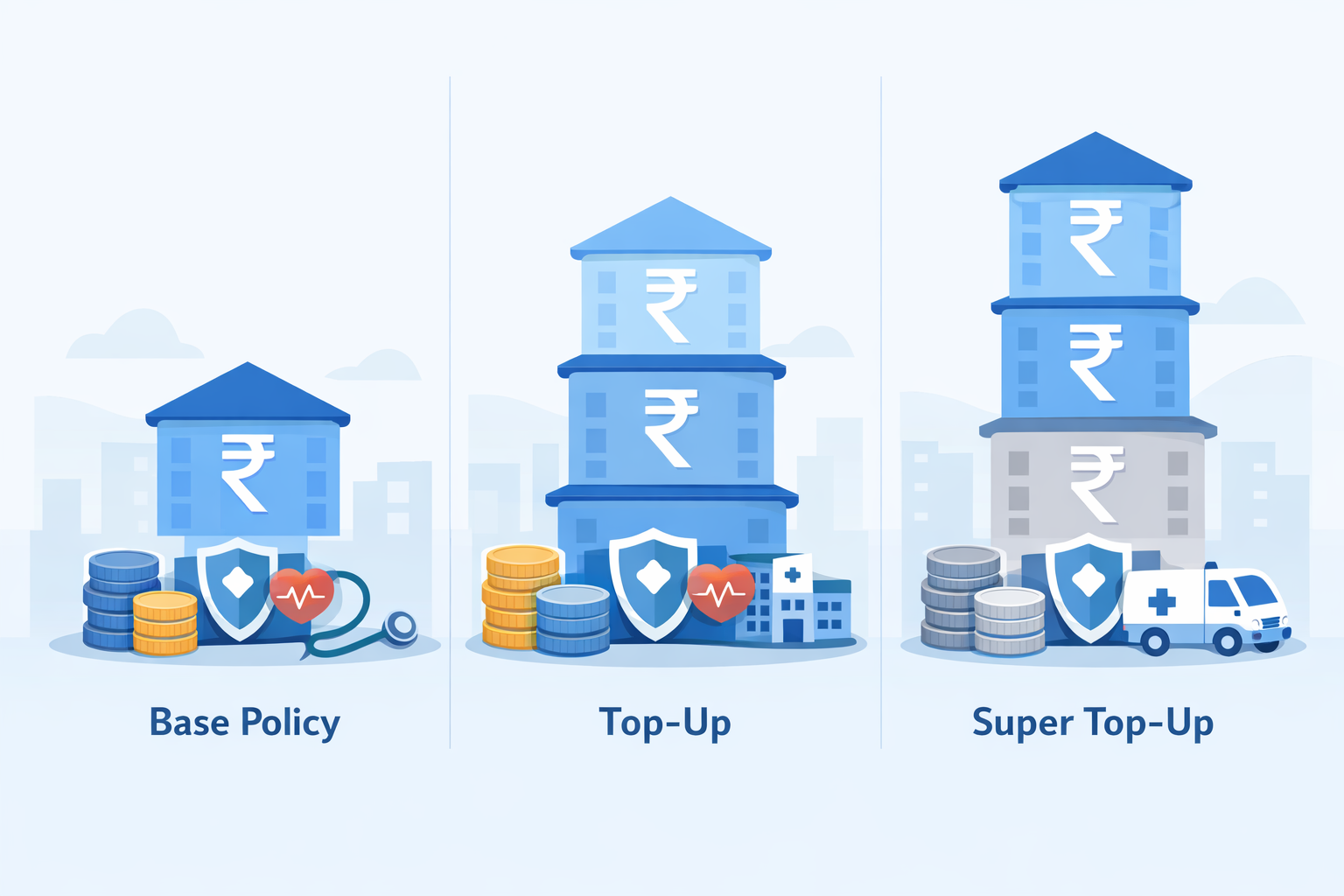
To maximize protection without paying exorbitant premiums:
- Top-Up plans cover hospitalization costs above a certain deductible per claim.
- Super Top-Up plans cover multiple claims aggregated over the year after the base policy is exhausted.
Example: Base floater of ₹5 lakh + Super Top-Up of ₹20 lakh = Better protection at a lower cost.
Benefits Beyond Hospitalisation
A good family floater policy often covers more than just hospital bills:
- Pre-hospitalization and post-hospitalization costs
- Daycare procedures
- Ambulance charges
- AYUSH treatments like Ayurveda and Homeopathy
These expenses add up quickly, so always check your policy details.
Other Policy Features to Consider
- Waiting periods: Pre-existing conditions usually have a waiting period of 2–3 years.
- Network hospitals & cashless claims: More network hospitals = easier cashless treatment.
- Restoration & No-Claim Benefits: Some policies restore the sum insured after a major claim or reward claim-free years with higher coverage.
Is a Family Floater Always the Best Choice?
Not necessarily.
- Elderly parents or members with chronic illnesses may exhaust a shared policy quickly.
- Separate individual plans or senior citizen plans can sometimes be more effective.
Real-World Examples & Government Benchmarks
Government schemes provide a benchmark for adequate coverage:
- Tamil Nadu’s health insurance scheme increased family cover to ₹5 lakh.
- Punjab’s Mukh Mantri Sehat Bima Yojana covers up to ₹10 lakh per family.

If government schemes are going this high, private plans with ₹20–30 lakh family floater health insurance coverage provide better financial security for middle-class families.
Common Mistakes People Make
- Choosing low coverage because “no one has claimed yet.” One major hospitalization can wipe out a small sum insured.
- Ignoring metro city costs—routine procedures can exceed ₹10–15 lakh.
- Not accounting for future medical inflation—coverage adequate today may not be enough in a few years.
Conclusion
So, how much family floater health insurance coverage is enough?
- Metro families: ₹20–30 lakh or more
- Families including elderly parents: ₹20 lakh+, sometimes separate policies
- Tier-2 or Tier-3 cities: ₹10–15 lakh may suffice
- Consider top-up or super top-up plans to boost coverage cost-effectively
The key is matching coverage with your family’s size, ages, health conditions, and expected hospital costs.
Frequently Asked Questions (FAQs)
1. What is the minimum family floater health insurance coverage recommended?
At least ₹20 lakh for metro families. Smaller cities may start at ₹10–15 lakh. (PolicyBazaar)
2. Can one person use the entire sum insured?
Yes. The sum insured in a floater plan is shared among all members.
3. Should I include my parents in the same floater?
Not always. Older parents may exhaust coverage quickly. Separate senior policies can be safer.
4. What is medical inflation and why does it matter?
Medical inflation refers to rising treatment costs over time. Today’s coverage may be insufficient in a few years if you don’t account for it.
5. Can I increase my coverage later?
Yes. You can increase the sum insured at renewal or add top-up/super top-up plans.