

The Punjab government has announced a landmark healthcare initiative offering ₹10 lakh cashless health insurance coverage per family. This move aims to significantly reduce out-of-pocket medical expenses and ensure access to quality healthcare for residents of Punjab, regardless of income level.
In this article, we explain what the Mukh Mantri Sehat Bima Yojna / MMSY is, who is eligible, what it covers, how it works, and whether it is enough on its own. We also compare it with existing health insurance options to help you make informed decisions.
Mukh Mantri Sehat Bima Yojna / MMSY
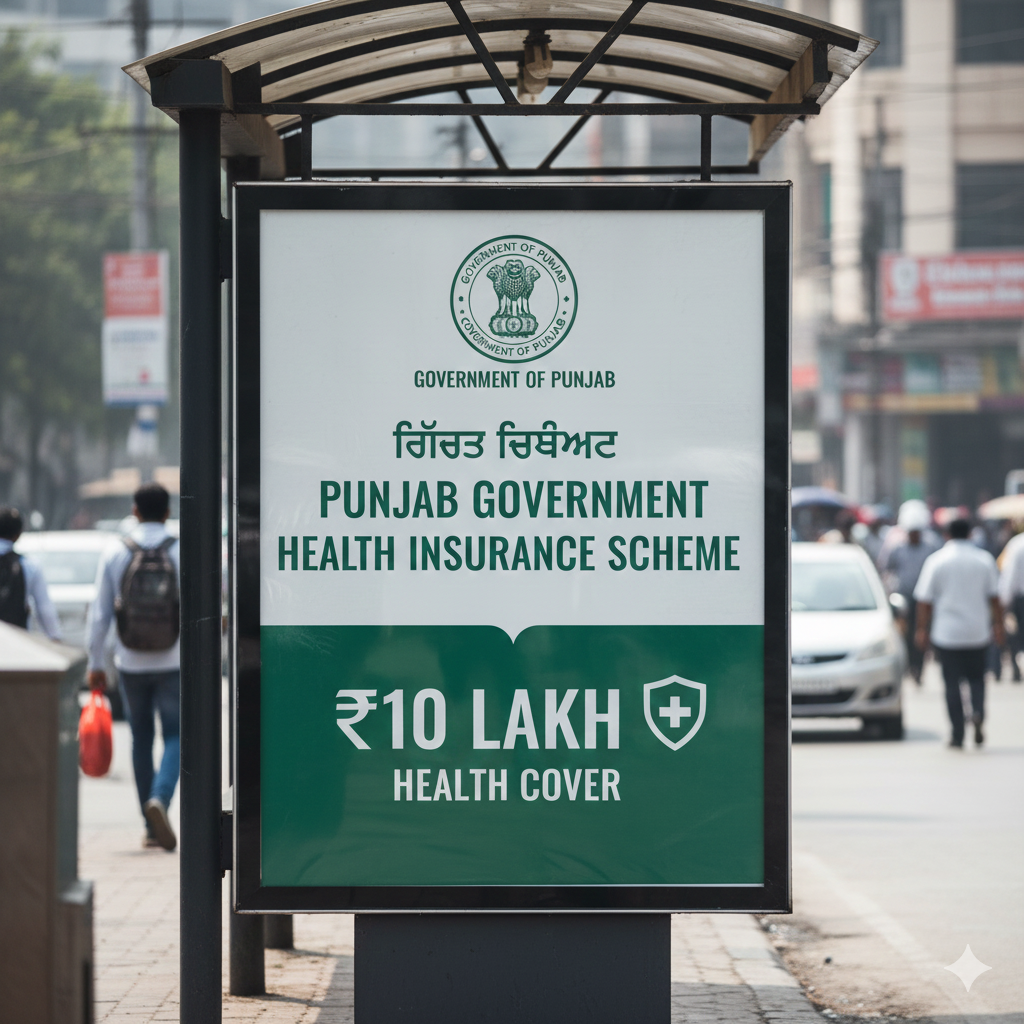
The proposed scheme—popularly referred to as the Punjab government’s ₹10 lakh health insurance scheme—is designed as a cashless medical cover that can be used at empanelled government and private hospitals.
Unlike traditional mediclaim policies, this is a state-sponsored health protection program, meaning beneficiaries do not pay premiums directly. The government bears the cost to ensure wide coverage and financial protection during medical emergencies.
What Is the Mukh Mantri Sehat Bima Yojna / MMSY?
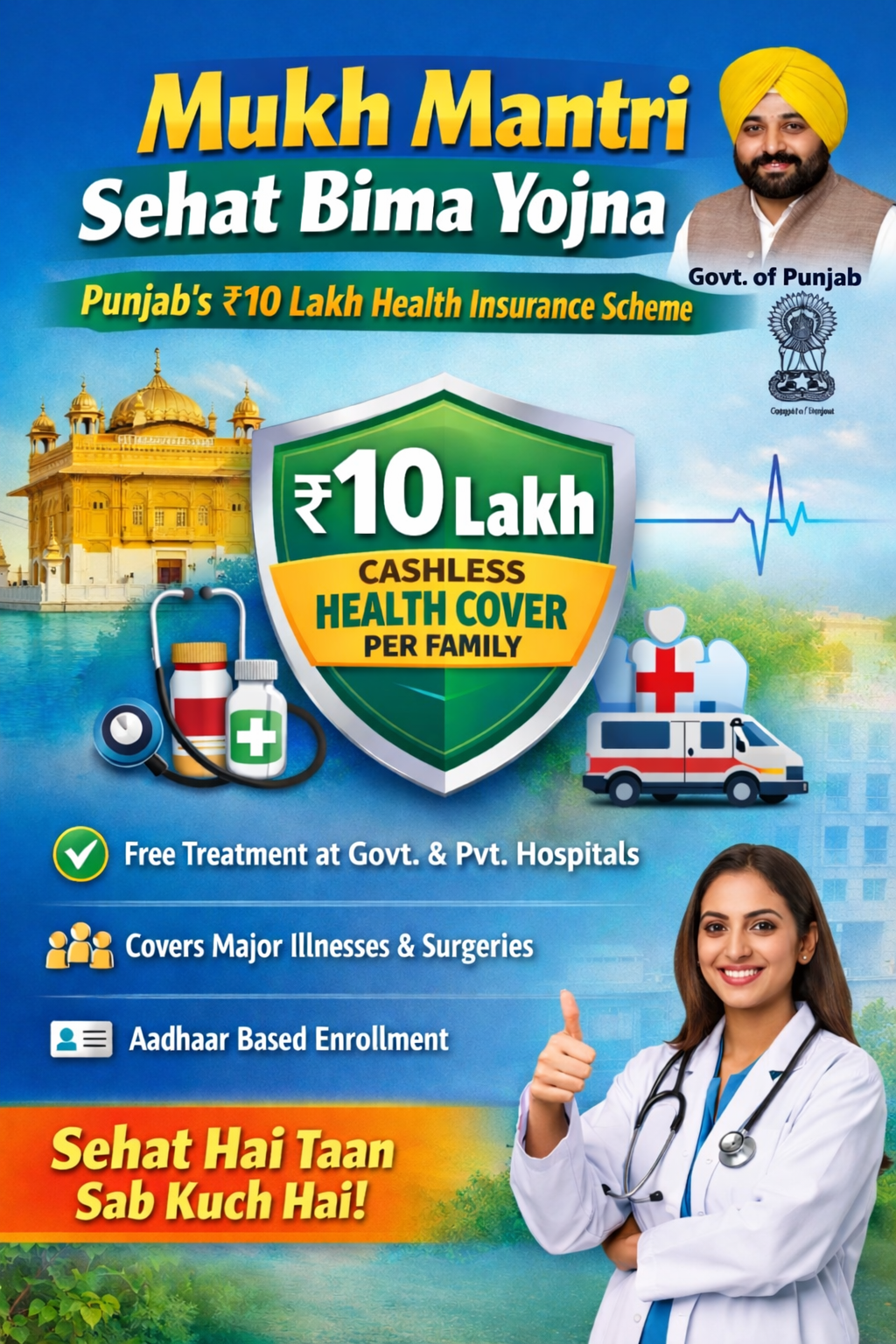
The scheme provides cashless hospitalization coverage of up to ₹10 lakh per family per year. It is intended to cover a wide range of medical treatments, including major surgeries, critical illnesses, ICU care, and advanced procedures.

This scheme is separate from the Ayushman Bharat – PM-JAY program, which offers ₹5 lakh coverage to eligible families across India. Punjab’s initiative aims to expand coverage both in amount and reach.
You can read more about PM-JAY on the official Ayushman Bharat portal
https://www.pmjay.gov.in
Who Is Eligible for the Punjab government’s Health Insurance Scheme?
One of the most notable features of this scheme is its broad eligibility criteria.
Eligibility Highlights
- Punjab residents (proof of residence required)
- No income cap announced
- Coverage expected to include:
- General families
- Senior citizens
- Government employees and pensioners
- Aadhaar-based identification likely to be used for verification
This makes it different from many government health schemes that are limited to economically weaker sections.
What Does the ₹10 Lakh Coverage Include?
While the final list of benefits is issued by the state health department, the coverage is expected to include:
Major Inclusions
- Hospitalization expenses
- Surgeries (general and specialized)
- ICU and critical care
- Diagnostics and investigations
- Pre- and post-hospitalization expenses (within defined limits)
- Cashless treatment at empanelled hospitals
Likely Exclusions
- Cosmetic procedures
- Non-medical expenses
- OPD-only consultations (unless specified)
- Treatments not approved under the scheme guidelines
How Does the Cashless Treatment Work?
The scheme is expected to function through a health card or digital ID, similar to other government health programs.
Process Flow
- Beneficiary visits an empanelled hospital
- Health card or Aadhaar verification is done
- Hospital seeks pre-authorization from the scheme administrator
- Treatment is provided without upfront payment
- Hospital settles the bill directly with the government/insurer
This model reduces financial stress during emergencies and avoids reimbursement delays.
List of Empanelled Hospitals
Both government and selected private hospitals are expected to be empanelled under the scheme.
Large private hospital chains that already participate in PM-JAY or state schemes are likely to be included. For updated hospital lists, beneficiaries should refer to official Punjab government health portals or notifications.
Is ₹10 Lakh Health Cover Enough?
While ₹10 lakh is a substantial amount, it may not always be sufficient, especially for:
- Long-term cancer treatment
- Organ transplants
- Extended ICU stays
- Advanced cardiac or neurological procedures
Additionally, government schemes often come with package rate caps, which may restrict room rent or treatment choices.
That’s why many experts recommend using government health schemes as a base layer, supplemented by an individual health insurance policy.
How Is This Different from Private Health Insurance?
| Aspect | Punjab Govt Scheme | Private Health Insurance |
|---|---|---|
| Premium | Paid by govt | Paid by policyholder |
| Coverage limit | ₹10 lakh | Customizable |
| Waiting period | Usually minimal | Applies |
| Hospital choice | Empanelled only | Wider network |
| Policy ownership | Government-controlled | Individual-owned |
Should You Still Buy Personal Health Insurance?
Yes. Even if you are eligible for the Punjab scheme, a personal health insurance policy offers:
- Lifetime renewability
- No dependency on government policy changes
- Higher flexibility and add-ons
- Better room and treatment choices
Government schemes are excellent safety nets, but they are not substitutes for comprehensive personal coverage.
Impact on Government Budget and Public Exchequer
While the Punjab government’s ₹10 lakh health insurance scheme offers strong financial protection to citizens, it also has significant fiscal implications for the state.
Health insurance schemes of this scale are funded entirely through taxpayer money, which means the cost is ultimately borne by the public exchequer. Depending on enrollment numbers, claim ratios, and hospital utilization, the annual financial outgo can run into thousands of crores of rupees.
State-sponsored health insurance programs typically involve:
- Premium payments to public or private insurers
- Administrative and operational expenses
- Rising claim costs due to increased awareness and utilization
Over time, this creates recurring budgetary pressure, especially for states already managing fiscal deficits.
You can explore broader public healthcare financing trends on authoritative platforms like the NITI Aayog and Ministry of Health & Family Welfare.
Is the ₹10 Lakh Health Insurance Scheme a Populist Measure?

From a policy perspective, schemes offering high-value benefits at zero direct cost to beneficiaries are often described as populist welfare measures.
The Punjab ₹10 lakh health insurance scheme fits this category because:
- It provides visible, high-impact benefits to a large voter base
- There is no direct contribution from beneficiaries
- The announcement aligns closely with public demand for affordable healthcare
Populist schemes are not inherently negative. In healthcare, they can:
- Improve access to treatment
- Reduce catastrophic health expenditure
- Increase healthcare utilization among underserved groups
However, critics argue that without strong cost controls, such schemes may:
- Encourage overutilization of hospital services
- Increase fraudulent or inflated billing
- Divert funds from preventive healthcare and infrastructure development
This is why experts stress the importance of robust audits, hospital empanelment controls, and transparent reporting.
Balancing Welfare and Fiscal Sustainability
The long-term success of the Punjab ₹10 lakh health insurance scheme will depend on how well the government balances citizen welfare with fiscal discipline.
Key factors to watch include:
- Annual budget allocations to the scheme
- Claim settlement ratios and fraud control
- Hospital package rate revisions
- Integration with existing central and state health programs
If managed efficiently, the scheme can serve as a safety net without destabilizing state finances. If not, it risks becoming a recurring fiscal burden with limited long-term sustainability.
This is also why policymakers continue to encourage citizens who can afford it to maintain personal health insurance coverage, reducing dependence on government-funded healthcare alone.
Final Thoughts
The Punjab government’s ₹10 lakh health insurance scheme is a major step toward universal healthcare access. It provides strong financial protection and can significantly reduce the burden of medical expenses for families.
However, for long-term security and flexibility, it works best when combined with a personal health insurance policy. As healthcare costs continue to rise, layered coverage remains the most practical approach.
Frequently Asked Questions (FAQs)
1. Is the Punjab ₹10 lakh health insurance scheme free?
Yes, beneficiaries are not required to pay any premium. The cost is borne by the Punjab government.
2. Is this scheme the same as Ayushman Bharat?
No. Ayushman Bharat offers ₹5 lakh coverage and has eligibility restrictions, while Punjab’s scheme offers ₹10 lakh and aims for wider inclusion.
3. Can I use both Punjab health insurance and private insurance?
Yes. You can use a private health insurance policy as a top-up if expenses exceed the scheme limit.
4. Will OPD expenses be covered?
OPD coverage is usually limited or excluded unless specifically notified in scheme guidelines.
5. How can I apply for the Punjab ₹10 lakh health insurance scheme?
Applications are expected to be Aadhaar-based, either online or through designated enrollment centers once official registration begins.