



If you’re involved in India’s construction sector, you’ve probably noticed a sudden surge in conversations about CAR policy in construction. Following Finance Minister Nirmala Sitharaman’s Union Budget 2026-27 announcement on February 1, 2026, search interest for construction insurance policies has skyrocketed—and for good reason.
With the government allocating ₹12.21 lakh crore for capital expenditure and introducing groundbreaking schemes to boost domestic construction equipment manufacturing, the construction industry is poised for unprecedented growth. But with this massive expansion comes equally massive risks. That’s where understanding CAR policy in construction becomes absolutely essential.
What Exactly is CAR Policy in Construction?
Let’s start with the basics. CAR stands for Contractor’s All Risk, and it’s not your average insurance policy. Think of CAR policy in construction as a comprehensive safety net that protects every stakeholder involved in a building project—from the moment construction materials arrive at the site until the project is officially completed and handed over.
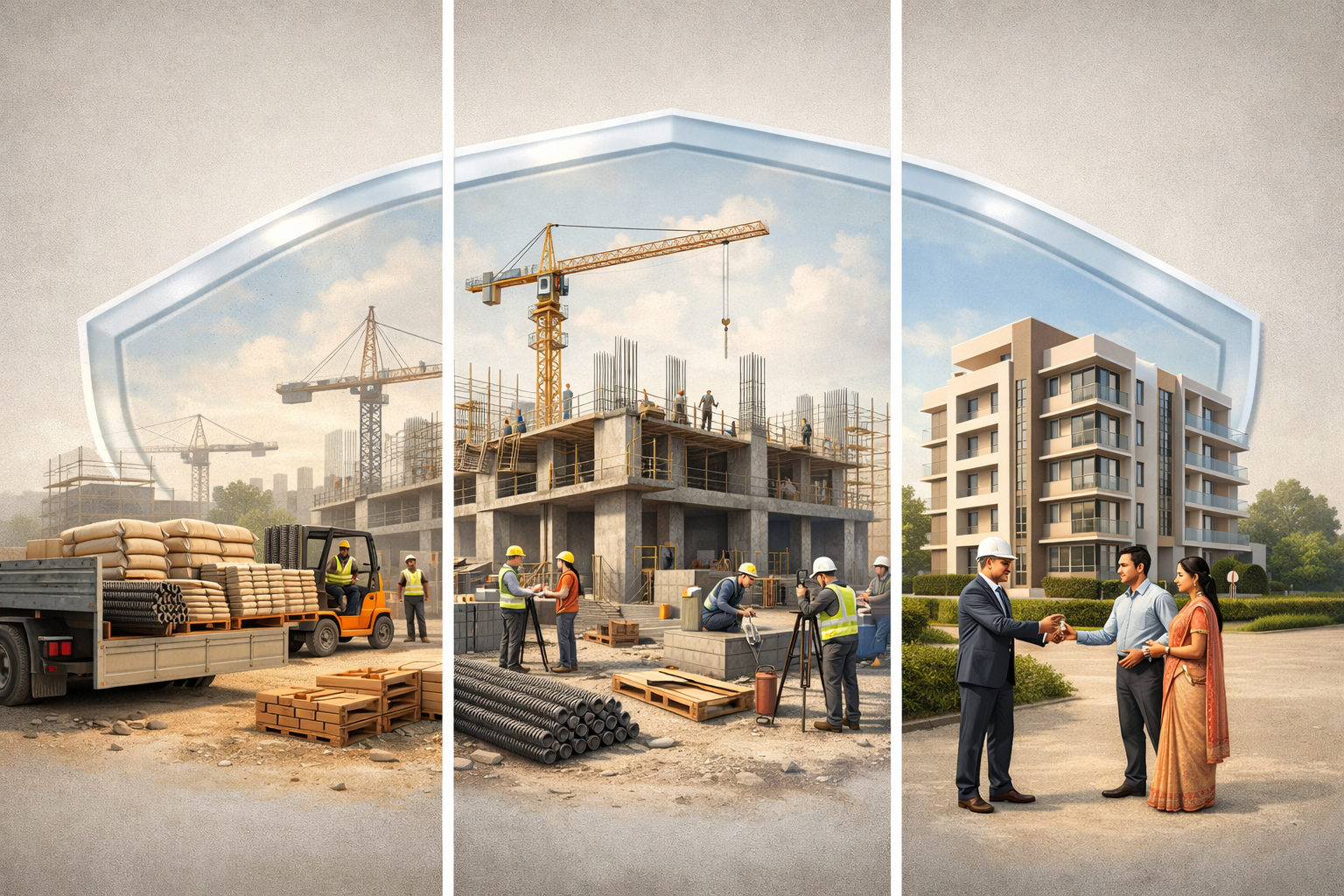

According to the National Insurance Company, this specialized insurance covers civil construction works including residential buildings, commercial complexes, factory sheds, dams, roads, bridges, canals, and irrigation projects. But it goes far beyond just protecting physical structures.
The beauty of CAR policy in construction is its all-encompassing nature. It covers accidental damage from fire, lightning, explosions, floods, earthquakes, theft, and even human errors like negligence or carelessness. Plus, it includes third-party liability coverage—protecting you if construction activities accidentally cause injury to someone or damage to neighboring property.
(if you want to read more about RERA MANDATORY INSURANCE, go here.)
Why Budget 2026 Changes Everything for Construction Insurance
Here’s where things get interesting. The Union Budget 2026-27 isn’t just about throwing money at infrastructure—it’s about fundamentally transforming how India builds. The government has introduced a “Scheme for Enhancement of Construction and Infrastructure Equipment” as a landmark initiative, promoting domestic production of high-value equipment like tunnel boring machines, earthmoving machinery, and crane systems.
The transport sector alone received an allocation of ₹5.98 lakh crore, while urban development spending increased to ₹85,522 crore. We’re talking about building seven new high-speed intercity rail corridors, operationalizing 20 new national waterways, and establishing dedicated freight corridors connecting Dankuni in the east with Surat in the west.
What does this mean for CAR policy in construction? Simple: more projects, bigger machinery, higher values, and significantly greater risks that need comprehensive coverage.

Perhaps most intriguingly, the budget proposes establishing an Infrastructure Risk Guarantee Fund specifically designed to mitigate development and construction-phase risks. This fund aims to improve risk confidence for private developers and lenders, directly acknowledging that proper risk management—including robust insurance coverage—is fundamental to India’s infrastructure growth story.
Understanding the Real Coverage: What’s Protected Under CAR Policy in Construction
When you invest in CAR policy in construction, you’re securing protection against multiple risk categories that could derail your entire project.
Material and Equipment Protection forms the foundation. Every brick, steel beam, cement bag, and piece of machinery at your construction site is covered. If a storm damages your stored materials or thieves make off with expensive equipment, your CAR policy in construction steps in to cover replacement costs.
The third-party liability component is equally crucial. If falling debris injures a passerby, or if your excavation damages a neighboring building’s foundation, the legal liability coverage within your CAR policy in construction protects you from potentially devastating lawsuits.
Human element risks represent another critical coverage area. Construction involves numerous workers, subcontractors, and supervisors. Mistakes happen, and your CAR policy in construction covers these human-error scenarios, provided they’re accidental and not willful misconduct.
Who Needs CAR Policy in Construction?
CAR policy in construction protects multiple stakeholders simultaneously. Contractors and subcontractors are primary beneficiaries, shielding them from financial losses that could threaten business continuity. Project owners and developers need assurance that their investment is protected, which is why many make CAR policy in construction a mandatory requirement before work begins.
Banks and financial institutions funding construction projects often insist on valid CAR insurance before disbursing loans. While not directly covered, the policy protects their investment by ensuring projects can continue even after unexpected losses.
What’s Not Covered: Understanding the Exclusions
Understanding exclusions helps manage expectations. War, terrorism, civil commotion, nuclear risks, and radioactive contamination are typically excluded. Willful negligence or intentional damage cannot be claimed.
Design defects are generally excluded unless you specifically purchase add-on coverage. If work stops completely or partially, losses arising from that cessation aren’t covered. Damage to crops, forests, or cultivated land also falls outside coverage scope.

The Budget Connection: Why Construction Insurance Demand is Surging
The February 1, 2026 budget didn’t just allocate money—it created a construction boom where CAR policy in construction transforms from optional to essential.
The Container Manufacturing Scheme received ₹10,000 crore over five years. The budget’s focus on infrastructure development means every new project requires corresponding CAR policy in construction coverage.
The government’s Infrastructure Risk Guarantee Fund signals official recognition that construction-phase risk mitigation is central to achieving India’s infrastructure goals, working alongside CAR policy in construction to create comprehensive risk management.
How to Choose the Right CAR Policy in Construction
Start by accurately assessing your project value—your sum insured should reflect complete costs. Examine policy tenure carefully; your CAR policy in construction should cover the entire construction period from groundwork to completion.
Pay attention to add-on covers relevant to your project. A high-rise building needs different coverage than highway construction. Choose insurers with reputations for fair, prompt claim settlement, and understand documentation requirements.
Real-World Impact: When CAR Policy in Construction Saves the Day
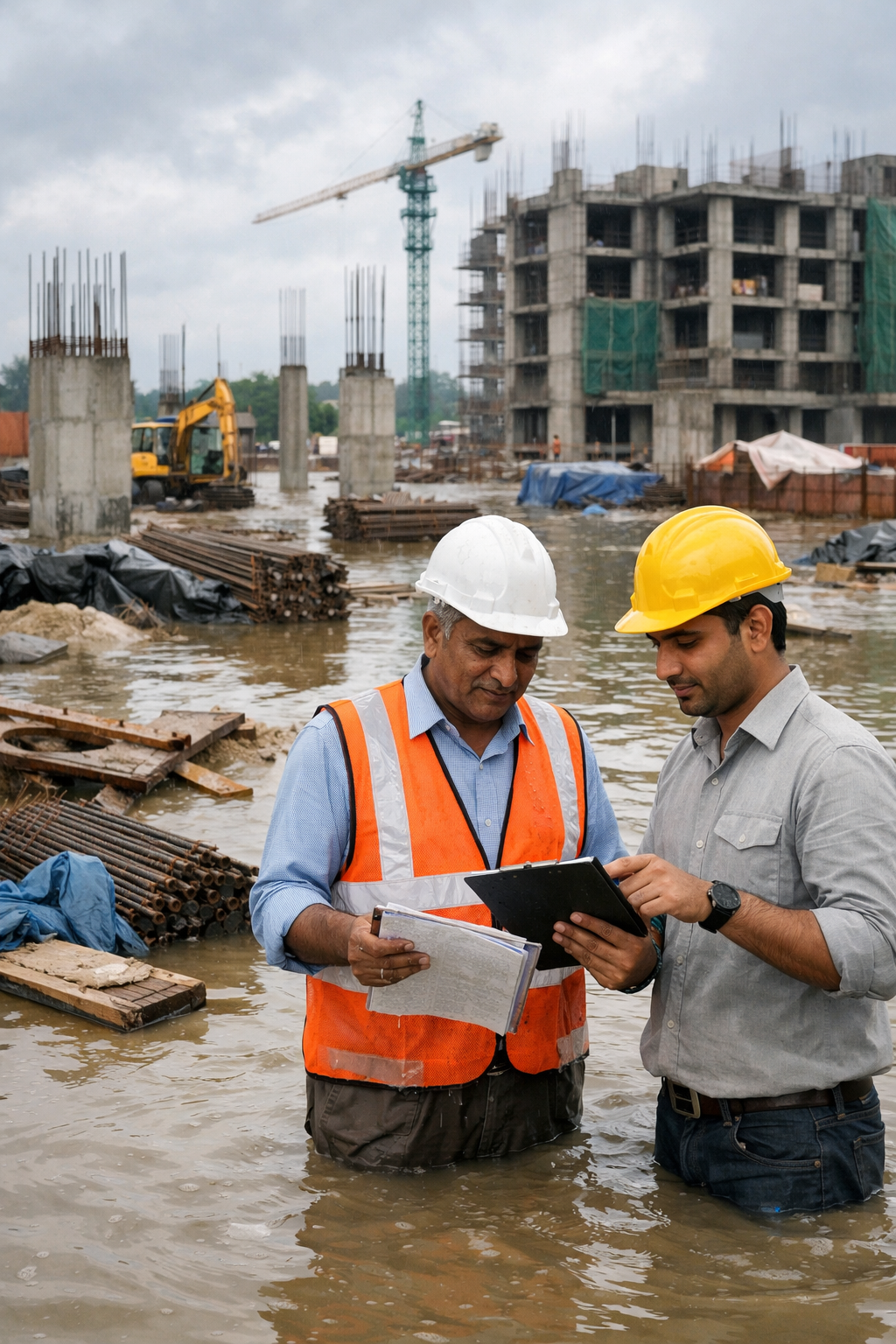
Consider a realistic scenario: you’re building a commercial complex in Pune. Three months in, an unexpected monsoon causes severe flooding. The flooding damages cement, electrical equipment, and partially constructed foundation work. Flood water also seeps into a neighboring property’s basement, causing ₹5 lakh damage.
Without CAR policy in construction, you’d face expenses exceeding ₹50 lakh—potentially bankrupting a small contractor. With proper coverage, your insurer handles material damage, foundation repairs, and third-party liability claims. You pay only the deductible, and your project continues with minimal disruption.

The Digital Transformation: Buying CAR Policy in Construction Online
Getting CAR policy in construction coverage has never been easier. Most major insurers now offer completely paperless online purchasing with instant quotes and swift policy issuance.
To buy online, you’ll need a proposal form with project details, estimated costs, and timelines, plus construction plans, contract agreements, and KYC documents. The entire process can be completed in hours rather than days, with the ability to compare quotes from multiple insurers instantly.
Looking Ahead: The Future of Construction Insurance
The Union Budget 2026-27 signals India’s commitment to becoming a global infrastructure powerhouse. As the government pushes for enhanced domestic construction equipment production and massive infrastructure development, CAR policy in construction will become even more critical.
Emerging technologies like drones for site inspections, IoT sensors for real-time monitoring, and AI-powered risk assessment are making construction insurance more precise and affordable. The emphasis on public-private partnerships means more private players entering construction, expanding the market for CAR policy in construction significantly.
Final Thoughts: Protecting India’s Construction Future
The sudden spike in Google search for “car policy in construction” isn’t just search traffic—it’s a signal. India’s construction industry is entering an era of unprecedented growth and opportunity. But with great opportunity comes great risk.
Whether you’re a contractor bidding on government infrastructure projects, a developer building commercial complexes, or a subcontractor specializing in particular construction services, CAR policy in construction isn’t optional—it’s fundamental to your business survival and success.
The Budget 2026-27 has laid out an ambitious roadmap. Your job is to ensure you’re protected as you help build that future. Understanding and investing in comprehensive CAR policy in construction is how you do exactly that.
Frequently Asked Questions (FAQs)
Q1: How long does a CAR policy in construction typically last?
A CAR policy lasts for the entire construction period, starting from material arrival at site until project completion, with extensions allowed if work is delayed.
Q2: Is a CAR policy available for small residential projects or only large ones?
A CAR policy is available for all project sizes, from small homes to large infrastructure developments.
Q3: Does a CAR policy cover theft of materials and equipment at the site?
Yes, theft or burglary at the construction site is covered under a CAR policy, subject to policy terms and exclusions.
Q4: What is the difference between CAR and EAR insurance?
CAR covers civil construction works, while EAR covers erection, testing, and commissioning of machinery and equipment.
Q5: How quickly should claims be reported under a CAR policy?
Claims must be reported immediately after the incident, typically within 14–30 days as specified in the policy.